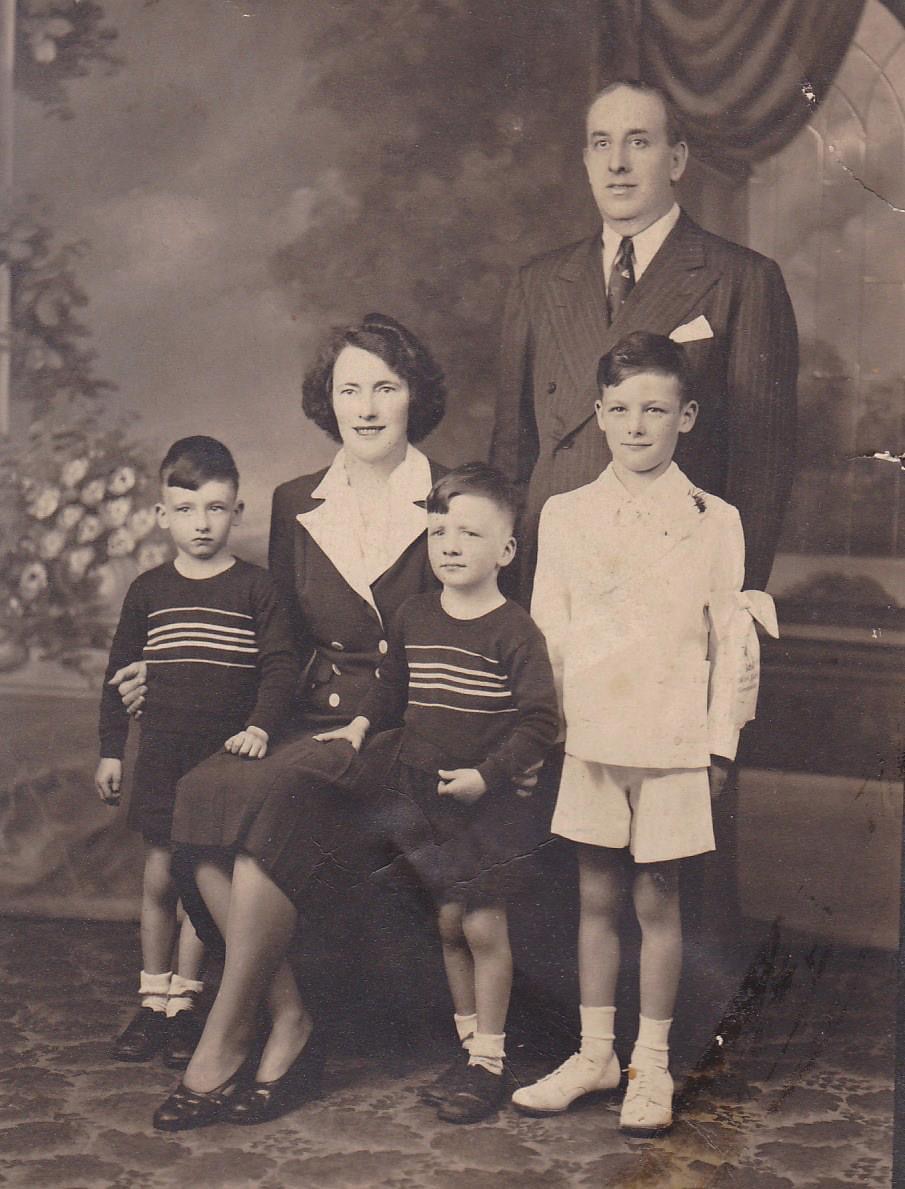
Above, my grandparents, who immigrated to the United States from Ireland, with my father, right, and. my uncles.
When I think about my Irish heritage, especially on St. Patrick’s Day, I am reminded of just how fortunate I am.
As a second-generation Irish American on my father’s side, it’s not lost on me what my grandparents must have sacrificed when they left their homes, families and country behind them. This realization is despite my never hearing their stories. My grandfather passed away before I was born, and I was going on six when my grandmother died. My maternal grandmother, who was also of Irish descent, always told me that my father’s mother didn’t like talking about Ireland. So, even if she lived longer, I may still not know much.
I only know a few pieces of information. My grandparents didn’t meet until they came to America. After arriving in the United States, my grandfather joined the Army as a cook in World War I. My grandmother traveled to the country with a cousin. She would become a housekeeper, and my grandfather eventually found work as a hotel elevator operator.
Like most Irish immigrants, they were looking for economic opportunities that didn’t exist in their homeland and a better life for themselves and their future family.
While I may not know all they sacrificed, when I was in Rhode Island in the fall of 2023, what they and other Irish Americans did to attempt to achieve the American Dream was driven home for me.
I visited the Museum of Newport Irish History during that trip. Despite being a small museum, I was there with my husband and my mother for nearly two hours with our knowledgeable tour guides. Not only did we learn about the Irish who once worked at the Newport Mansions, who would spend their Sundays at church and then at the now-landmark Forty Steps near the beach, but we also received an overall history of Irish Americans’ contributions to our country.
What struck me most was the history of Irish immigrants who helped build our country’s canals. According to a display at the museum, tens of thousands of immigrants from Ireland helped build more than 40,000 miles of waterways in the United States from 1790 to 1855. In addition to facing discrimination, backbreaking work and overall horrible working conditions, Irish immigrants, like many others from various countries, were poorly compensated for their work.
As I left the museum, the story of the men working on the canals left me teary-eyed. Imagine leaving your homeland with the hope of a better life, and once you arrive in the country, even though you weren’t sure if you would ever see those better days, continuing because you had faith that one day at least your children may be able to enjoy an easier and better life.
While most humans work hard and make sacrifices to a certain extent, most of us will never know just how much our ancestors gave up for us. Irish Americans like me are among those who are here today due to the hard work and sacrifices of immigrants.
Even though my grandparents may not have worked in the mansions in Rhode Island or on any canals, I am grateful for all the Irish who did as well as similar jobs. Somehow, they sent word back home that there were opportunities in the United States, and people like my grandparents kept coming.
If my grandparents could see their grandchildren and great-grandchildren, they would be proud. They would find their hard work and sacrifices were worth it. We may not always realize it, but we live the American Dream they once sought when they crossed the Atlantic Ocean.
For more information on the Museum of Newport Irish History, visit newportirishhistory.org.

Above, Newport, Rhode Island’s Forty Steps
 Rita's Rambling Road